
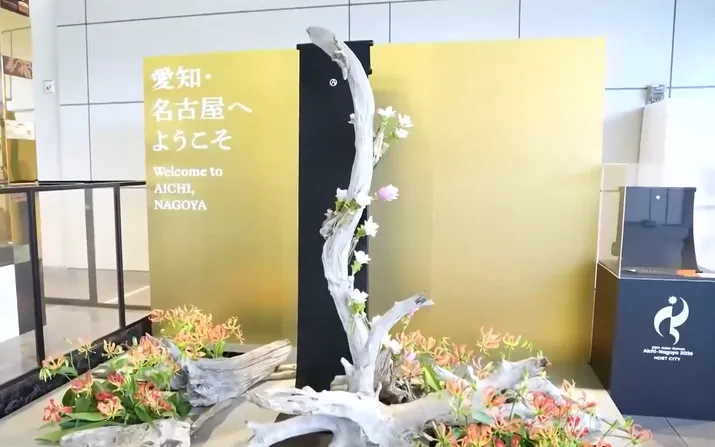
This year's edition of the Asian Games took place in Aichi Prefecture and the city of Nagoya, marking Japan's third time hosting the event. The local organizers used every opportunity to showcase the region's unique cultural identity, from small street corners to roads, railway stations, exhibition centers, and competition venues. The International Broadcast Center (IBC) and Main Media Center (MMC) provided two important platforms for showcasing the region’s culture.
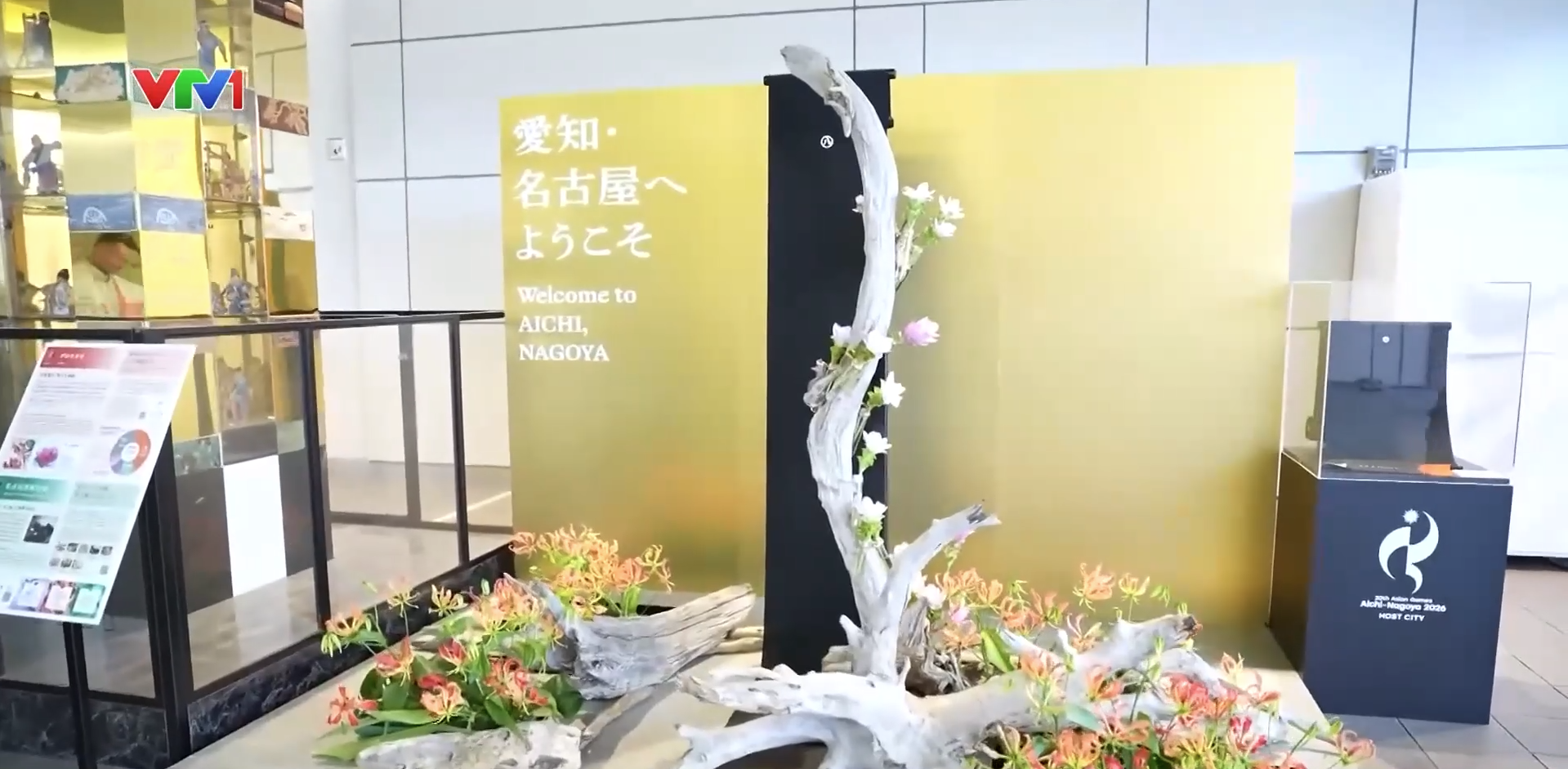
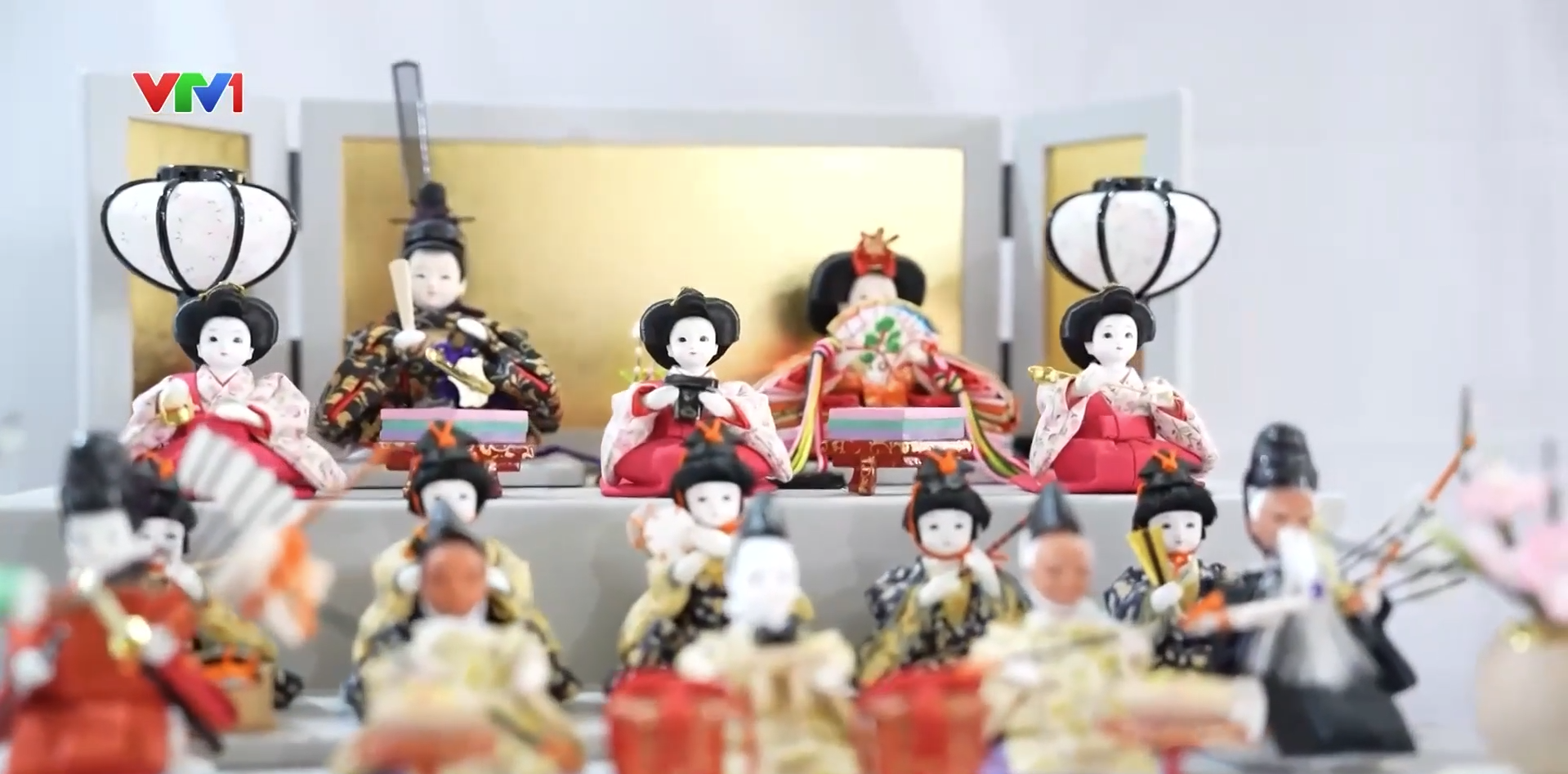
(Screenshot)
With hundreds of television crews, journalists, and international media professionals working each day at the Nagoya International Exhibition Center, the Asian Games Organizing Committee and local organizers created displays highlighting the beauty of Aichi and Nagoya. Flowers were arranged alongside examples of traditional craftsmanship, creating a refined cultural space at the IBC and MBC throughout the Games.
Despite Nagoya’s modern character, the city and surrounding Aichi Prefecture are known for traditional crafts and flower production. These include textile crafts such as silk weaving for traditional Japanese kimonos. Through these displays, journalists working every day at the Asian Games media center had an opportunity to learn more about and experience the traditional arts of Nagoya and Aichi Prefecture.
The organizers also introduced four themed areas, including Nagoya Station, the Mizuho Park area and the Nagoya International Exhibition Center. These details may have seemed small, but they gave visitors, particularly journalists more accustomed to moving between competition venues, a chance to slow down, discover more about Aichi and Nagoya, and gain additional experiences while covering the 2026 Asian Games.
Japanese children wearing their distinctive yellow hats cheer on athletes at ASIAD 20.
Anyone familiar with the innocent world of little Maruko from the Japanese manga series might have seen a similar image vividly depicted around the venues of ASIAD 20.
Primary schoolchildren could be seen wearing their distinctive yellow hats along routes leading to the Asian Games venues. Instead of watching only on television, children under the age of 10 were able to experience first-hand the speed, strength, and intensity of elite competition on home soil. It was one of the ways in which Japan sought to nurture a culture of physical activity, turning Asian athletes into real-life role models and inspiring sporting ambitions from an early age.
Residents perform traditional Japanese drumming at ASIAD 20.
ASIAD 20 concluded after 16 days of competition. On the final day of boxing, spectators at the venue in Nishio were treated to a taiko drum performance by local schoolchildren and young people. At the conclusion of the boxing competition, participating delegations were treated to a lively taiko drum performance by local schoolchildren and young people, creating a memorable cultural highlight and celebrating Japanese tradition.
Throughout the 2026 Asian Games, people across Aichi continued their everyday lives while also finding their own ways to contribute to the event’s success, particularly in communities hosting competition venues. Those contributions gave residents a direct connection to the Games while helping to create the welcoming atmosphere that was integral to the broader success of ASIAD 20.


