
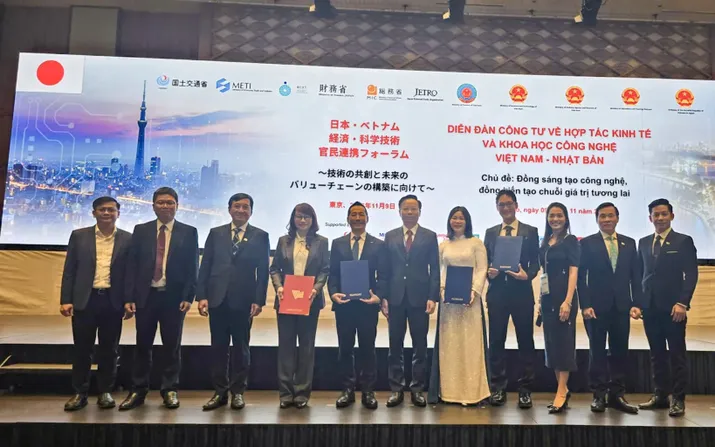
The Memorandum of Understanding (MoU), covering the 2026–2030 period, was exchanged during the Japan–Vietnam Economic, Science and Technology Public-Private Cooperation Forum. The agreement brings together the educational and research capabilities of Vietnam National University – Ho Chi Minh City (VNUHCM), the operational experience of Suntory PepsiCo Vietnam Beverage Company Limited, and the global expertise of Suntory Beverage & Food Limited in beverage science and sustainability.
The partnership focuses on four main areas: applied research, sustainable packaging and the circular economy, talent development, and the promotion of health and active lifestyles.
In applied research, the parties will explore projects that contribute to Vietnam's sustainable development, strengthen scientific capabilities and generate long-term social value.
On sustainable packaging, cooperation will focus on developing lighter packaging with higher recycled content and recyclable multi-layer materials, while maintaining product quality. The parties will also research and propose pilot models for waste sorting, collection and management in island communities in Vietnam.
Talent development is another key component of the agreement. Students from VNUHCM will have opportunities to undertake internships across different departments of Suntory PepsiCo Vietnam, as well as participate in factory visits and study tours. Mentoring sessions and practical knowledge-sharing activities will also be organized for students and lecturers, with contributions from company leaders, managers and experts from the Suntory Group.
In addition, the partnership will include initiatives to encourage physical activity and promote healthier, more active lifestyles among students on the university campus.
Speaking at the event, Mitsuhiro Kawamoto, Chief Organizational Excellence Officer at Suntory Beverage & Food, said Vietnam was a strategically important market for the group. He noted that the agreement reflected a long-term commitment not only to business investment but also to people, knowledge and the environment.
He added that combining the group's expertise with the university's research and educational capabilities could create value for the wider community.
Nguyen Thi Thanh Mai, Chancellor of VNUHCM, described the agreement as an opportunity for the university's scientists and students to work more closely with businesses and gain exposure to international standards and experience.
She expressed the expectation that the cooperation would produce practical research outcomes and contribute to developing high-quality human resources to meet Vietnam's development needs.


