Liangzhu: Reviving a 5.000 year civilization through digital intelligence
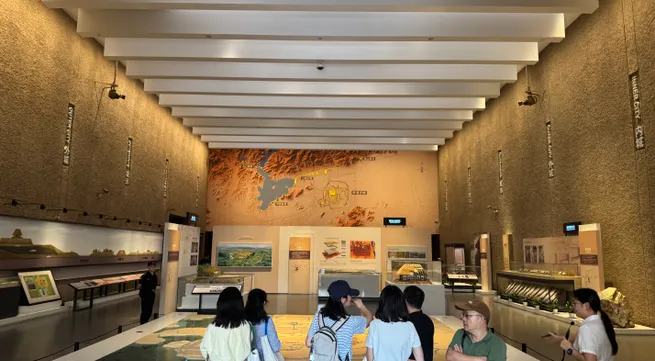
Digital guardianship of an ancient civilization
The exploration of the Archaeological ruins of Liangzhu City inscribed on the UNESCO World Heritage list in July 2019 was a highlight of the recent media and think-tank trip in Zhejiang. The week-long program, themed "Digital Intelligence Empowering Better Lives", gathered 11 scholars and journalists from ASEAN nations including Malaysia, Indonesia, Laos, Myanmar, and Vietnam. The delegation explored how Zhejiang integrates smart technology to both preserve its ancient heritage and enhance public welfare.
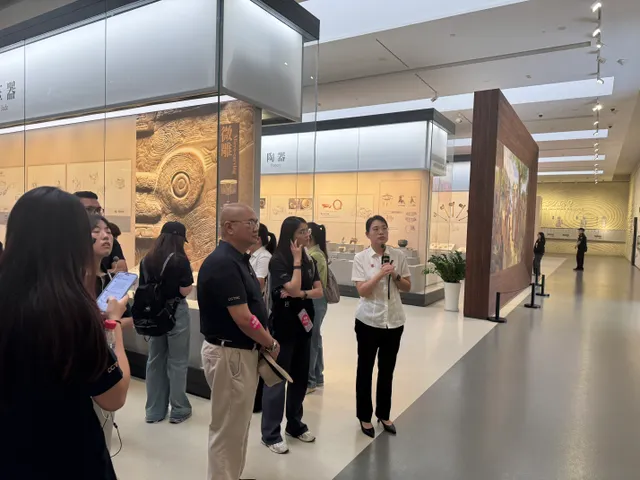
At the Liangzhu Museum, visitors embark on a journey where culture meets technology.
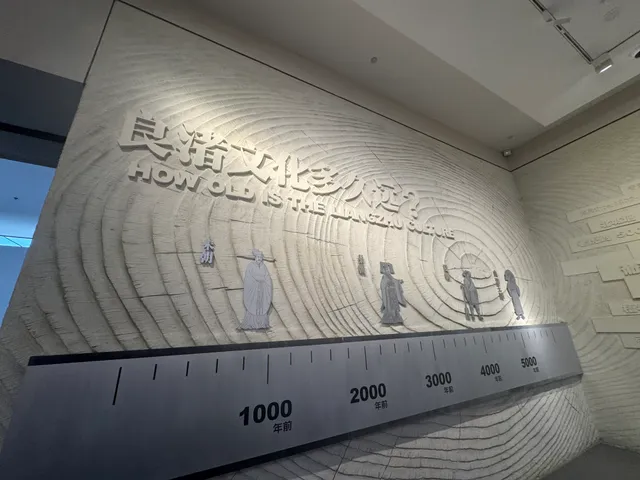
Liangzhu, a cornerstone of China’s 5,000-year-old civilization, is now protected through a cutting-edge "Culture + Technology" approach that turns archaeology into a futuristic experience. At the heart of this effort lies the "Liangzhu Ruins 5000+" intelligent management system - a comprehensive digital platform that combines excavation, research, and preservation.
The system connects over 1,000 surveillance cameras, five drone bases, fiber optic sensors, and real-time environmental monitors throughout the site. Satellite imaging is conducted quarterly, drones patrol monthly, and ground sensors track soil moisture levels around the clock. This network automatically triggers alerts when anomalies appear, reducing the response time from three days to just 30 minutes.
Using 3D modeling and digital twin simulations, researchers can recreate key structures such as the South City Wall, analyze potential impacts of typhoons or floods, and adjust river levels before reaching danger thresholds — ensuring the long-term protection of the ancient ruins.
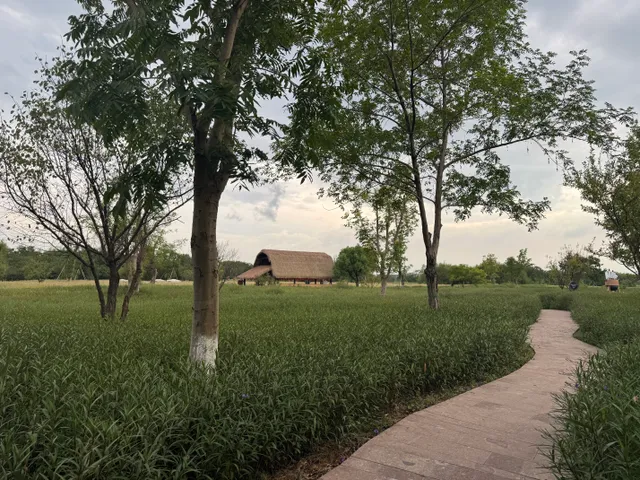
AR and VR: Bridging time and imagination
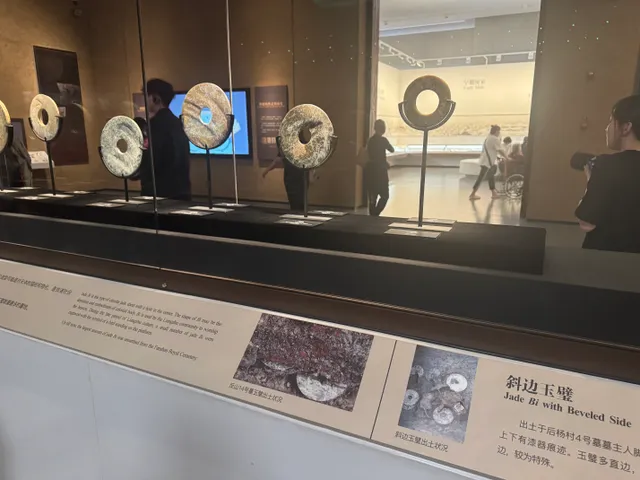
At the Liangzhu Museum, visitors embark on a journey where culture meets technology. AR smart glasses act as a "key to time travel," automatically recognizing artifacts and allowing users to explore virtual reconstructions with simple gestures. In the "Jade Soul, National Spirit" exhibition, blue digital lines trace the sacred Bird Standing on High Platform motif on a jade bi, bringing a virtual bird to life as it circles above the viewer. A 3D sandbox model vividly reconstructs the ancient city’s palace, workshops, and royal tombs revealing the sophistication of Liangzhu’s urban design.
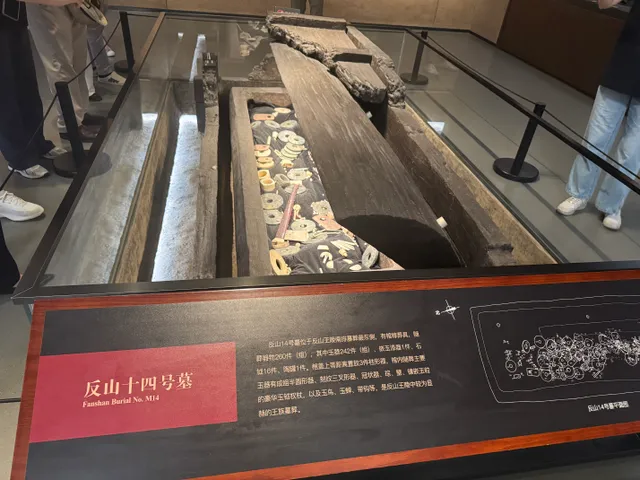
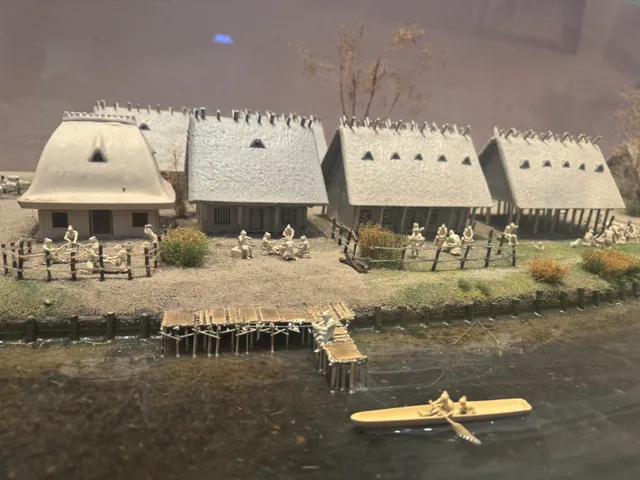
Visitors can scan QR codes along the Mojiaoshan Pilgrimage Path to activate the AR Palace Experience, standing atop the platform once home to Liangzhu’s rulers and witnessing its grandeur reimagined in augmented reality. The Fanshan Exhibition Hall further enhances immersion with holographic projections that explain the meaning of jade cong, bi, yue, and the Man-Beast Face divine pattern offering an intuitive window into Liangzhu’s cosmology.
Near the South City Wall, the Liangzhu VR Large Space experience transports visitors 5,000 years back in time. Wearing VR headsets, participants embark on a journey titled "The Covenant of the Divine Pattern" paddling virtual bamboo rafts through waterways, visiting jade workshops, and watching early rice farmers at work. The Zhejiang University digital team meticulously recreated details such as the 8,000-year-old Kuahuqiao dugout canoe with a precision of 0.03 millimeters, turning archaeology into an immersive, interactive "living archive."
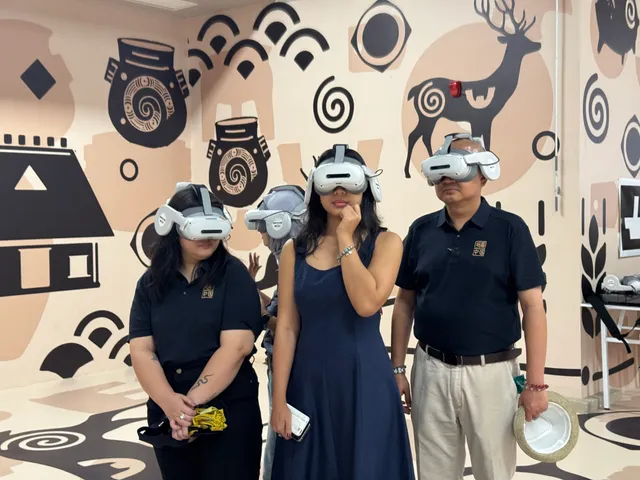
The Liangzhu VR Large Space experience transports visitors 5,000 years back in time.
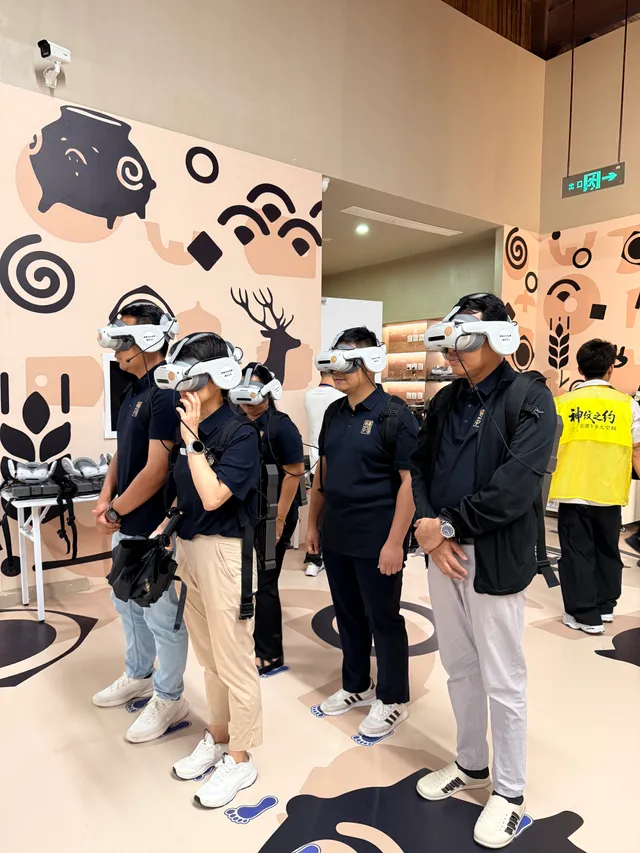
Visitors described the experience as "a bridge across time," praising how AR and VR technologies made the ancient civilization tangible. Pottery became "touchable," and ruins were "reborn" through holograms and simulations.
Through digital intelligence, Liangzhu is no longer a silent relic, it is a living story of innovation and heritage, reminding the world that the roots of civilization can thrive anew when tradition meets technology.
Tags:

More News





43 NGUYEN CHI THANH STREET - BA DINH DISTRICT - HA NOI - VIET NAM
Editor-in-chief: VU THANH THUY
Deputy Editor-in-chief: NGUYEN THI MY HANH, PHAM QUOC THANG, NGUYEN TRONG NINH
Email: toasoan@vtv.vn
Tel: +84 66 897 897
Copyright, VTV News, Vietnam Television (VTV).
Licence No. 483/GP-BTTTT dated December 29, 2023 by the Ministry of Information and Communications.

