
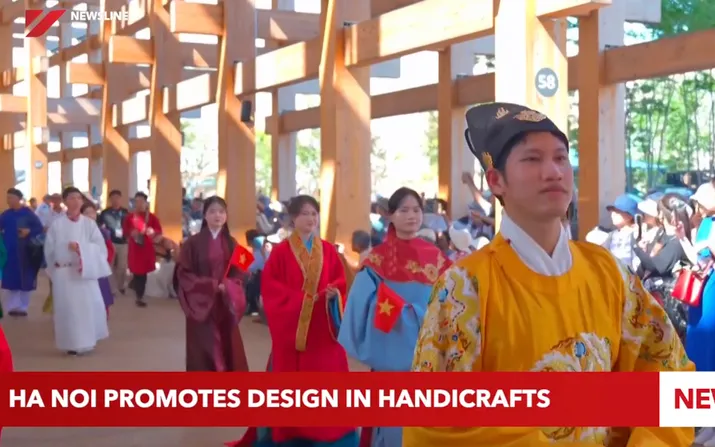
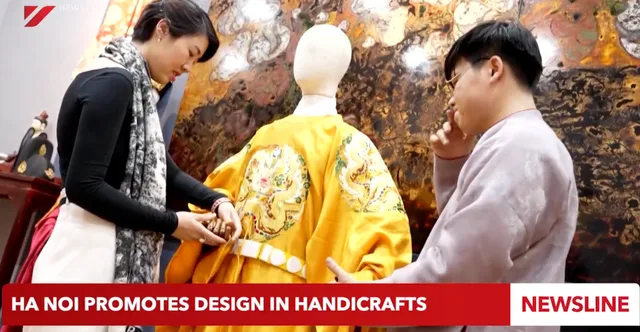
The royal robes of the Nguyen Dynasty, once seen mainly in history books and museums, are being revived through Van Thien Y's research. The designs now feature in films, stage productions and tourism events, expanding their reach and commercial value. The team is also adapting traditional patterns for everyday products such as shirts and scarves.
Nguyen Thi Nga, founder of Van Thien Y project, said: "Our research and creative teams have to find the right balance. We want to create everyday clothing that retains traditional designs while adapting them to modern life."
Modern design ideas are also bringing change to this 400-year-old craft village. This sixth-generation artisan uses bamboo strips dozens of times thinner than traditional ones to create intricate patterns. His products can fetch hundreds or even thousands of US dollars and are exported worldwide.
Nguyen Van Tinh, an artisan of Phu Vinh Craft Village in Hanoi, said: "My father was an artisan, but despite the sophisticated weaving techniques, the designs remained unchanged. I believe we must bring these skills to a wider audience by listening to the market and incorporating traditional weaving into modern designs."
Pham Tuan Long, director of the Hanoi Department of Culture, Sports and Tourism, said: "We are introducing support policies for artisans and designers to create more practical handicraft products. We are also investing in design to increase the economic value of these products."
By 2030, Hanoi aims to have six to ten groups of handicraft products exported directly, accounting for three to five per cent of the city's total export value.
Achieving this goal will require continued investment in creative design, helping traditional craft villages develop new products, reach wider markets and increase their economic value.


