
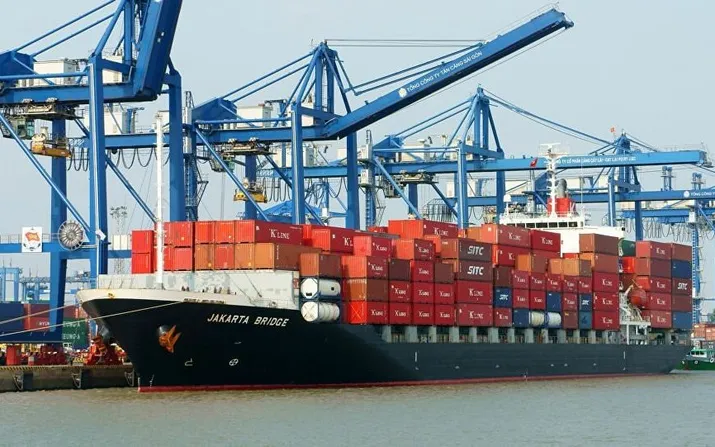
Hai Phong is streamlining the issuance of certificates of origin, helping businesses reduce costs, take advantage of free trade agreements and ensure timely deliveries to international markets.
All five steps in the certificate-of-origin process, from receiving and reviewing applications to approval, stamping and issuance, are now handled at a single service pointt at Hai Phong's Public Administrative Service Centre.
With more than 3,200 businesses directly engaged in international trade, demand for these services is high.
Nguyen Viet Anh from Jasan Vietnam Co., Ltd said: "Processing time has dropped from up to a day and a half to just two to six hours, saving time and resources while helping us better plan deliveries and paperwork."
Hai Phong processes around 120,000 applications for certificates of origin annually, with the number reaching up to 1,000 on peak days. Its administrative reforms have helped the city rank first nationwide in the 2025 Free Trade Agreement Implementation Index.
Nguyen Cong Han, Deputy Director of Hai Phong Department of Industry and Trade, said: "Exporters often face procedural difficulties when implementing free trade agreements. We visit businesses directly to inspect and guide them, helping ensure their operations run smoothly."
Last year, Vietnamese exports benefiting from preferential tariffs under FTAs exceeded 95 billion dollars. However, the utilisation of these preferences remains limited, at around 34 per cent under the EU-Vietnam Free Trade Agreement (EVFTA) and less than 10 per cent under the Comprehensive and Progressive Agreement for Trans-Pacific Partnership (CPTPP).
Trinh Thi Thu Hien, Deputy Director General of Agency of Foreign Trade under Ministry of Industry and Trade, said: "We aim to help businesses make the most of FTA markets and their preferential tariffs. We also provide information on trade defence measures so companies can plan their investment, production and business operations accordingly."
Beyond processing applications, authorities are working to resolve difficulties and help businesses meet market requirements.
Such efforts are essential to making administrative reforms more effective and delivering improvements in export performance.


