What is recurrent capsular contracture?
When the surgeon creates the implant placement space, fibrous tissue begins to form a capsule around the implant, known as the “Pocket”. This capsule acts as a protective layer that isolates the implant from the body’s native tissues after insertion. Normally, these tissues remain soft and pliable. However, in some postoperative patients, excessive fibroblast proliferation combined with impaired organization of the fibrous tissue surrounding the implant leads to the formation of fibrotic tissue (scar tissue, thickened and rigid with reduced elasticity), resulting in capsular contracture after breast augmentation.
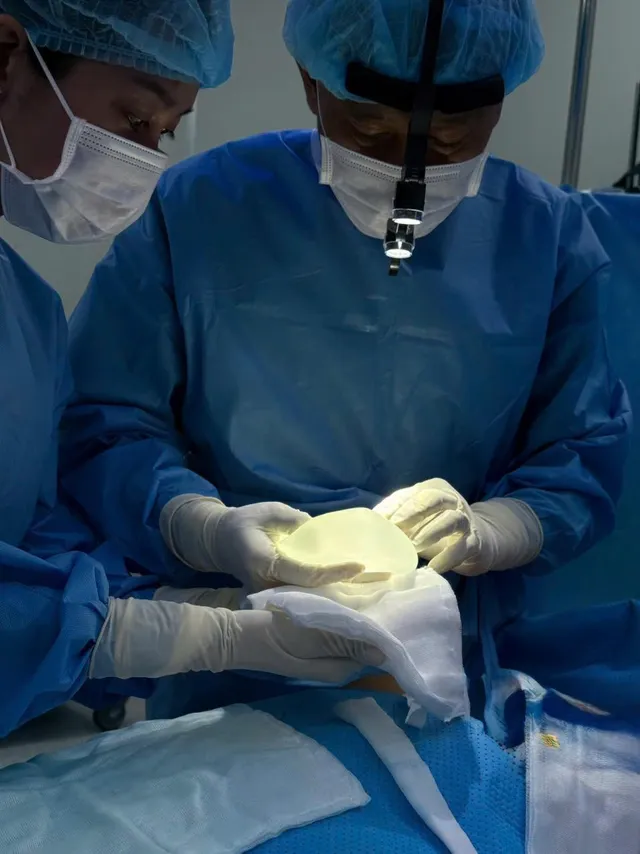
The surgeon removed the previously placed Motiva breast implant.
How to detect capsular contracture
Breast implant manufacturers aim to produce implants that are soft and harmonize with the natural structure of the mammary gland tissue. Softness is considered a key criterion for the success of a breast augmentation procedure. Therefore, patients should monitor breast firmness after surgery to detect potential signs of capsular contracture.
Typically, in the normal postoperative course, the breasts gradually soften between three months and one year following implant placement. In most cases, by one year, the breasts reach optimal softness, closely resembling the consistency of the patient’s surrounding mammary tissue.
In cases where breast softness does not improve between six months and one year postoperatively, patients should regularly assess the breast in both standing and lying positions, as early-stage capsular contracture (grade 1 or grade 2) is often difficult to detect. High-resolution breast MRI is a necessary diagnostic tool for the early detection of capsular contracture.
In cases of grade 3 or 4 capsular contracture, patients may experience pain, sharp discomfort, and breast deformities. Specifically, the breast may appear indented or bulging in a particular area, the projection of the breasts may become asymmetrical, the inframammary folds may be uneven, and the cleavage may appear widened and irregular. In severe cases, the entire breast contour may become distorted.
Below is a professional perspective from Dr. Ho Cao Vu regarding the causes, clinical signs, and surgical approach to capsulectomy and implant pocket reconstruction.
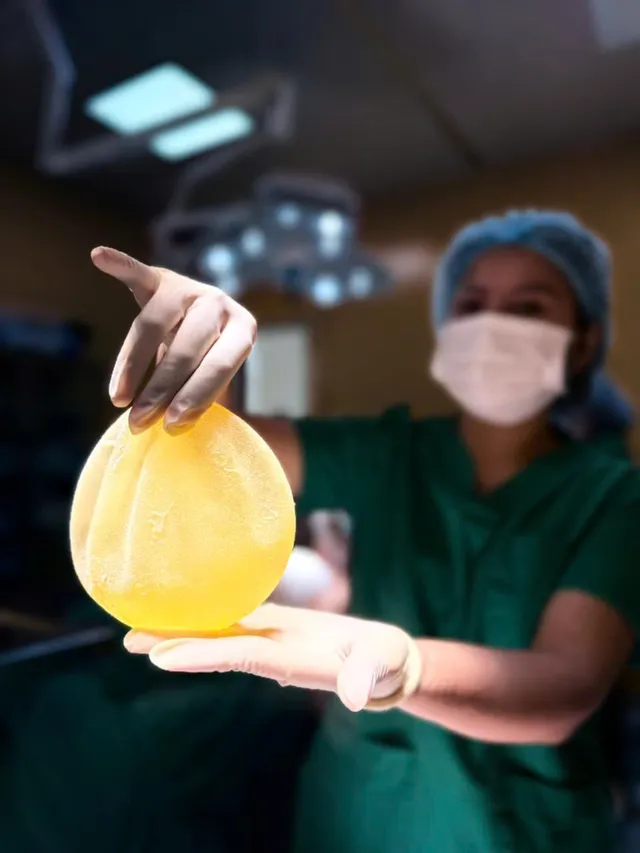
Removal of textured Allergan breast implants before bilateral capsulectomy with Ultrasonic Scalpel.
Causes of capsular contracture
The causes of capsular contracture can originate from both the surgeon and the patient. Contributing factors include: creating a pocket that is too narrow for the implant size, selecting implants that are disproportionately large relative to the patient’s anatomical structure, excessive bleeding or fluid accumulation during surgery, and non-compliance with postoperative breast care protocols. Although rare, there is also a small possibility that capsular contracture may result from an individual predisposition in which the patient’s immune system reacts adversely to any implanted material introduced into the body.
1. Creation of an overly narrow implant pocket
If the surgeon designs a pocket that is too narrow—lacking adequate space in certain areas or having an uneven, non-circular shape—it can prevent the implant from fully expanding within the pocket. Alternatively, the pocket design may not align with the patient’s chest wall anatomy (e.g., protruding or abnormally sunken chest wall). Over time, the deficient areas, along with muscle tightness or fibrous bands, may trap the implant in tight corners or crevices, creating localized pressure on the implant.
2. Tissue damage during pocket creation
In all types of surgical procedures—both reconstructive and aesthetic—an overly aggressive surgical technique or the use of electrocautery that causes tissue damage or burns can lead to significant postoperative pain, hematoma or seroma formation, delayed wound healing, and late complications such as capsular contracture.
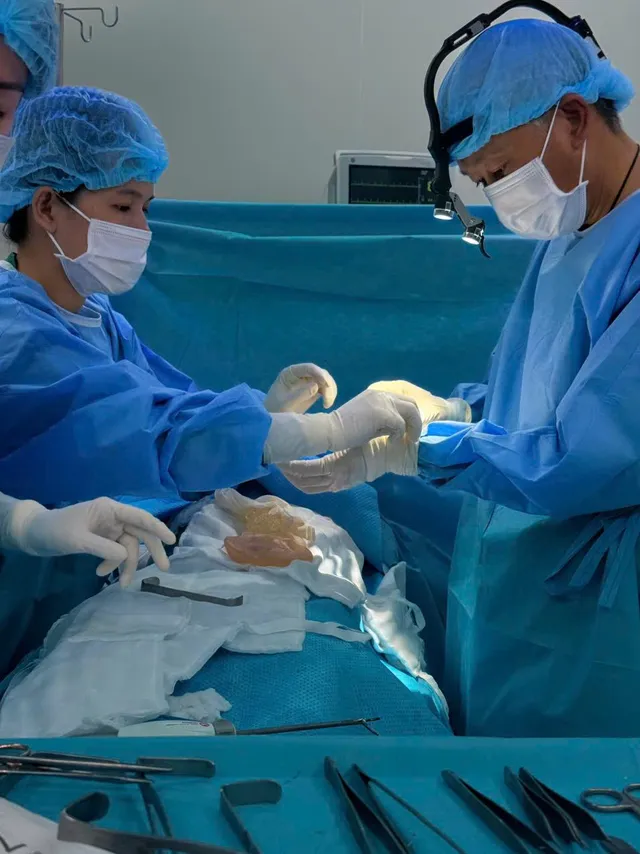
Rupture of textured breast implant over 10 years after augmentation.
3. Postoperative hematoma or seroma formation
Hematoma and seroma following breast augmentation are among the contributing factors to capsular contracture. These conditions increase the risk of chronic inflammation and stimulate fibroblasts—the collagen-producing cells—to become overactive, leading the body to form excessive fibrotic tissue in an attempt to “encapsulate” and isolate the accumulation. As a result, the capsule around the implant becomes more rigid.
Additionally, the presence of fluid in the pocket (hematoma or seroma) can exert pressure on the implant, potentially causing implant displacement or compression of surrounding tissues, further exacerbating tissue injury and triggering fibrotic responses.
Postoperative care
Improper postoperative care is an indirect but highly significant cause of capsular contracture after breast augmentation. Each surgeon has their own approach to surgery, implant pocket creation, dissection techniques, and postoperative management. Patients must adhere strictly to the prescribed postoperative care regimen to minimize the risk of developing capsular contracture.
Signs of capsular contracture
Grade 1: The breast remains soft and appears normal; the capsule has a slight firmness that can be felt when palpated in the supine position.
Grade 2: The breast appears normal with no signs of swelling, pain, or visible deformity; however, it feels firmer than usual to the touch, especially when lying down.
Grade 3: The breast becomes firm and its shape is altered due to contracture. It may appear rounded or the implant may be displaced upward or downward, causing deformity. Patients may experience persistent dull pain and tightening sensations in the chest area, along with visible distortion of the breast contour.
Grade 4: The breast is severely deformed, displaced, and asymmetrical. The capsule is markedly firm and contracted, causing significant pain and continuous discomfort in the chest.
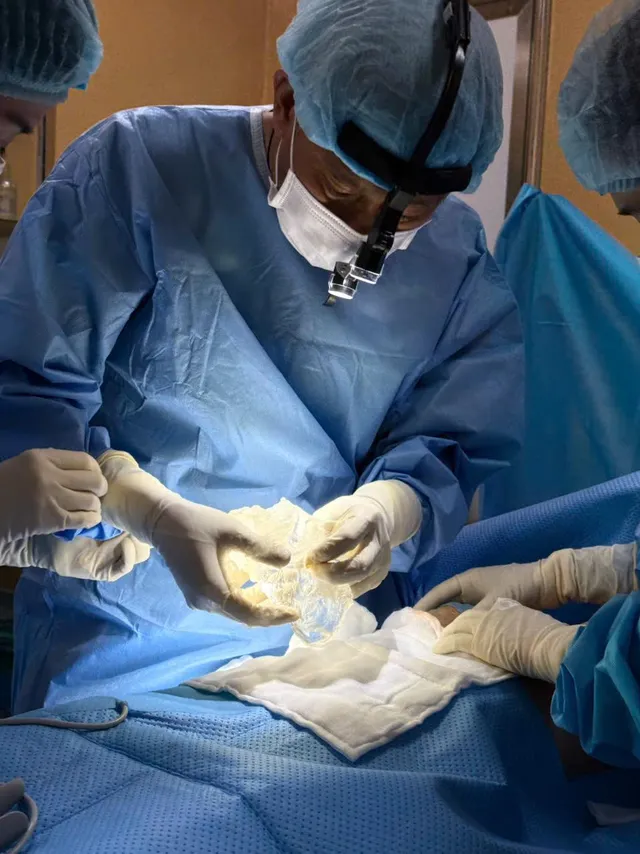
Rupture of smooth Allergan breast implant 7 years after augmentation.
Why is breast MRI necessary before capsulectomy surgery?
High-resolution breast MRI allows for comprehensive evaluation of breast tissue pathology, the fibrous capsule, the implant pocket, implant-related conditions, and any associated masses. (It is recommended because conventional MRI, ultrasound, and X-ray often fail to provide accurate results in cases involving breast implants or implant rupture.) Based on MRI findings, the surgeon can assess the condition of the capsule, identify abnormalities inside and outside the pocket, and determine the most appropriate surgical approach for the patient.
Procedure for breast implant removal and capsulectomy using ultrasonic surgical scalpel
Step 1: Perform high-resolution breast MRI to evaluate the condition of the breast tissue, implant, pocket, and any implant-related pathologies.
Step 2: Screen for potential cancer risks and assess implant-associated injuries.
Step 3: Conduct a clinical examination to develop a surgical plan, addressing associated complications such as capsular contracture, implant rupture, implant displacement, or pocket communication. Indication for new implant placement will be made if necessary.
Step 4: Preoperative testing must be conducted at a specialized general hospital prior to breast implant removal surgery. A standard implant removal procedure typically takes 30–45 minutes; however, in complex cases involving capsulectomy, pocket reconstruction, or implant rupture, the anesthesia duration will be longer.
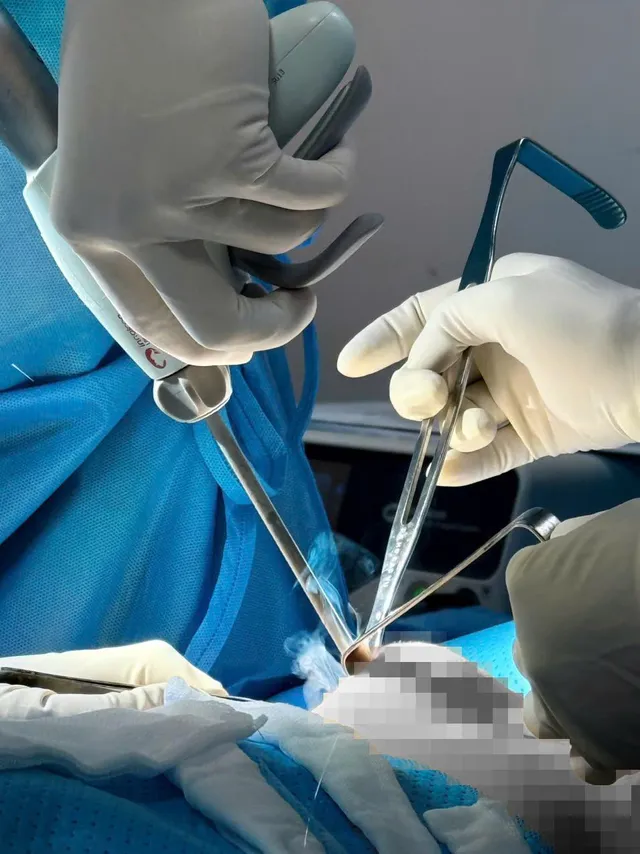
The surgeon used Ultrasonic Scalpel for capsulectomy.
Step 5: The surgeon makes a 3 cm to 3.5 cm skin incision either along the areolar margin or at the inframammary fold (for cases without abnormalities), then uses an ultrasonic surgical scalpel to dissect the tissue and access the old implant. The implant’s brand, dimensions, size, and projection level are then inspected.
Step 6: In cases of implant rupture or the presence of abnormal fluid, the surgical team must irrigate and clean the implant pocket. If the fluid appears cloudy, it must be cultured and subjected to antibiotic susceptibility testing.
Step 7: The ultrasonic surgical scalpel is used to excise the fibrous capsule, and the excised fibrotic tissue is sent for histopathological examination to determine whether it is benign or malignant. A frozen section biopsy should be prepared in advance if malignancy is suspected.
Step 8: Reconstruct the implant pocket (in cases where a new implant is indicated) to correct issues such as pocket communication, implant displacement, or pockets that are excessively wide or narrow.
Step 9: Apply a compression garment after surgery. For implant removal and replacement procedures, the patient may be discharged on the same day. However, in cases involving abnormalities such as capsulectomy or significant internal tissue damage, drainage is required, and the patient must stay overnight at the hospital.
Breast implant removal, capsulectomy, and new implant placement performed with an ultrasonic surgical scalpel may not require postoperative downtime, pain medication, or antibiotics, and the patient can be discharged on the same day.
Tags:

More News





43 NGUYEN CHI THANH STREET - BA DINH DISTRICT - HA NOI - VIET NAM
Editor-in-chief: VU THANH THUY
Deputy Editor-in-chief: NGUYEN THI MY HANH, PHAM QUOC THANG, NGUYEN TRONG NINH
Email: toasoan@vtv.vn
Tel: +84 66 897 897
Copyright, VTV News, Vietnam Television (VTV).
Licence No. 483/GP-BTTTT dated December 29, 2023 by the Ministry of Information and Communications.

