Training Workshop: VTV’s Digital Architecture & Roadmap
As VTV accelerates its digital transformation in content production, broadcasting, multi-platform distribution, data management, copyright protection, cybersecurity, and corporate governance, the Digital Architecture Framework is being positioned as more than just a technological initiative. It is intended to serve as a comprehensive governance framework that connects business processes, data, applications, digital platforms, infrastructure, and investment planning across the organization.
To support this effort, VTV’s Research and Development Center hosted a training workshop titled “Digital Architecture Framework, Digital Architecture and the Roadmap for Developing VTV’s Digital Architecture Version 1.0”. The program was based on Version 1.0 of the Digital Architecture Framework for Party agencies. Pham The Binh, Deputy Director General of the Digital Transformation Department under the Office of the Party Central Committee, gave the presentation.
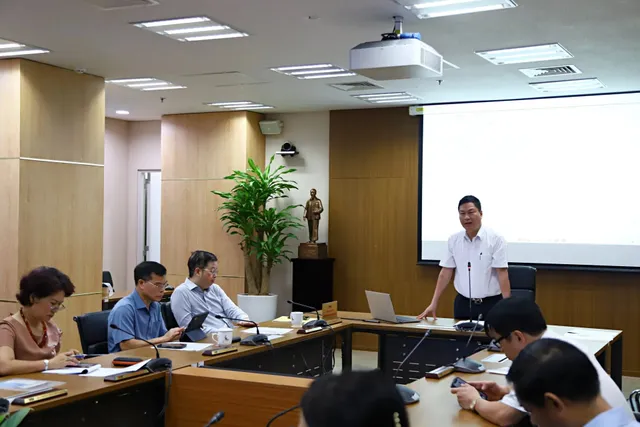
Pham The Binh, Deputy Director General of the Digital Transformation Department under the Office of the Party Central Committee, delivers his presentation.
VTV executives who workshop included Director General Nguyen Thanh Lam, Deputy Director General Dinh Dac Vinh, and department, center, and affiliated unit leaders involved in developing, operating, and managing VTV's Digital Architecture.
At the workshop, Director General Nguyen Thanh Lam emphasized that Digital Architecture is not simply about deploying software or solving isolated technology challenges. Rather, it represents a comprehensive management approach that connects people, data, workflow,s and infrastructure throughout the organization. He compared Digital Architecture to urban planning, where every component must be designed as part of an integrated system rather than developed independently to address short-term needs.
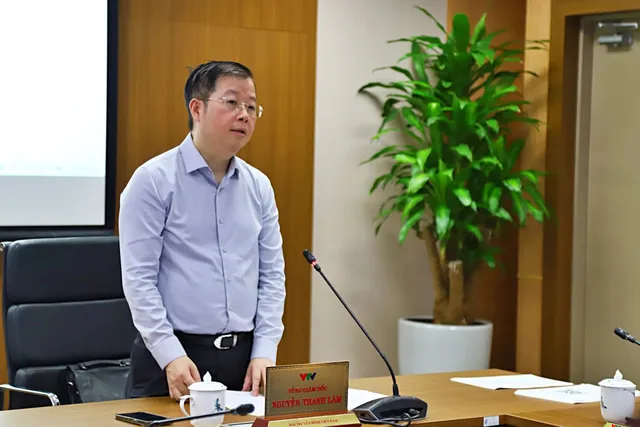
Nguyen Thanh Lam, Director General of VTV, delivers his remarks.
Lam stressed that VTV’s digital transformation should evolve from isolated technology applications to a system-wide, data-centric model that fosters cross-departmental collaboration and creates a shared organizational knowledge base. Such an approach, he noted, would help overcome fragmented systems, disconnected data, and duplicated investments, ultimately improving operational efficiency and reducing management risks.
The training program provided senior managers and technical staff with a foundation in Digital Architecture concepts and enterprise architecture methodologies and a roadmap for implementing VTV Digital Architecture Version 1.0.
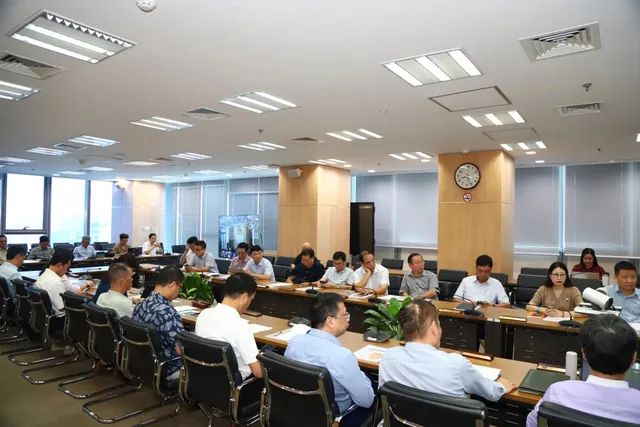
A key focus of the workshop was clarifying the role of Digital Architecture as a strategic governance tool rather than a collection of technologies or software systems. For VTV, the framework must align with the national broadcaster's mission while supporting the entire digital content value chain, from production and multi-platform distribution to content management, copyright protection, archive management, and audience data analytics.
The program consisted of five main sessions covering the fundamentals of Digital Architecture; the TOGAF enterprise architecture methodology and its application at VTV; the Digital Architecture Framework for Party agencies; the development roadmap for VTV Digital Architecture Version 1.0; and integrating digital architecture into the management of major digital investment projects.
Alongside theoretical discussions, participants also examined practical scenarios and exchanged views on implementation approaches and next steps. Through the workshop, VTV aimed to establish a shared understanding of Digital Architecture across the organization, define the overall structure of VTV Digital Architecture Version 1.0, identify priority areas for data, platforms, applications, infrastructure, and business capabilities, and create a unified framework for managing future digital investment projects.
The development of VTV Digital Architecture Version 1.0 is expected to provide a strategic foundation for the broadcaster's long-term digital transformation by supporting future operations across data governance, digital platforms, enterprise applications, infrastructure, cybersecurity, artificial intelligence, and digital investment management.
Tags:

More News





43 NGUYEN CHI THANH STREET - BA DINH DISTRICT - HA NOI - VIET NAM
Editor-in-chief: VU THANH THUY
Deputy Editor-in-chief: NGUYEN THI MY HANH, PHAM QUOC THANG, NGUYEN TRONG NINH
Email: toasoan@vtv.vn
Tel: +84 66 897 897
Copyright, VTV News, Vietnam Television (VTV).
Licence No. 483/GP-BTTTT dated December 29, 2023 by the Ministry of Information and Communications.

