Driving green industrial growth through resource efficiency
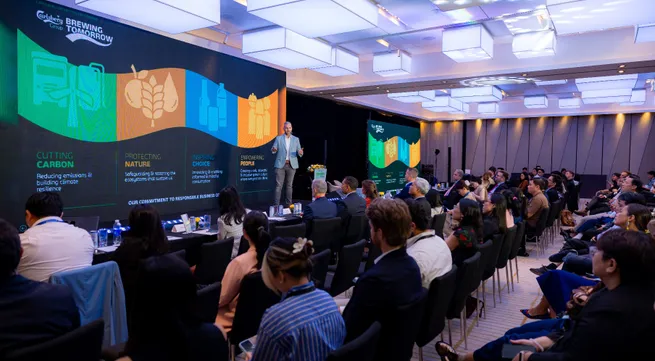
Organized by the Nordic Chamber of Commerce in Vietnam (NordCham) and the Vietnam Chamber of Commerce and Industry (VCCI), Green Industries Summit 2026 took place in Ho Chi Minh City on 10 September under the theme "Powering Vietnam’s Green Industry 4.0." It brought together more than 200 business leaders, policymakers and Nordic experts to explore the green and digital transitions shaping Vietnam’s growth agenda.
Representing Carlsberg Vietnam, Peter Wachenschwanz, Senior Director, Integrated Supply Chain, delivered the keynote "Brewing Tomorrow: Innovations Shaping the Future of Green Industries" and joined the panel "Building Vietnam’s Green Energy Ecosystem." Across both sessions, he shared how the company is increasing production capacity while reducing the resource intensity of its operations.
"Green transformation begins inside the brewery, with the discipline to use less water, less energy and fewer materials for every unit we produce. But its next stage extends beyond the brewery gate. Scaling renewable energy and circular solutions requires clear policy, viable commercial models and closer collaboration across the ecosystem. The opportunity is to connect operational efficiency with system-level change, so that industrial growth can create more value with a lower environmental footprint," Peter said.
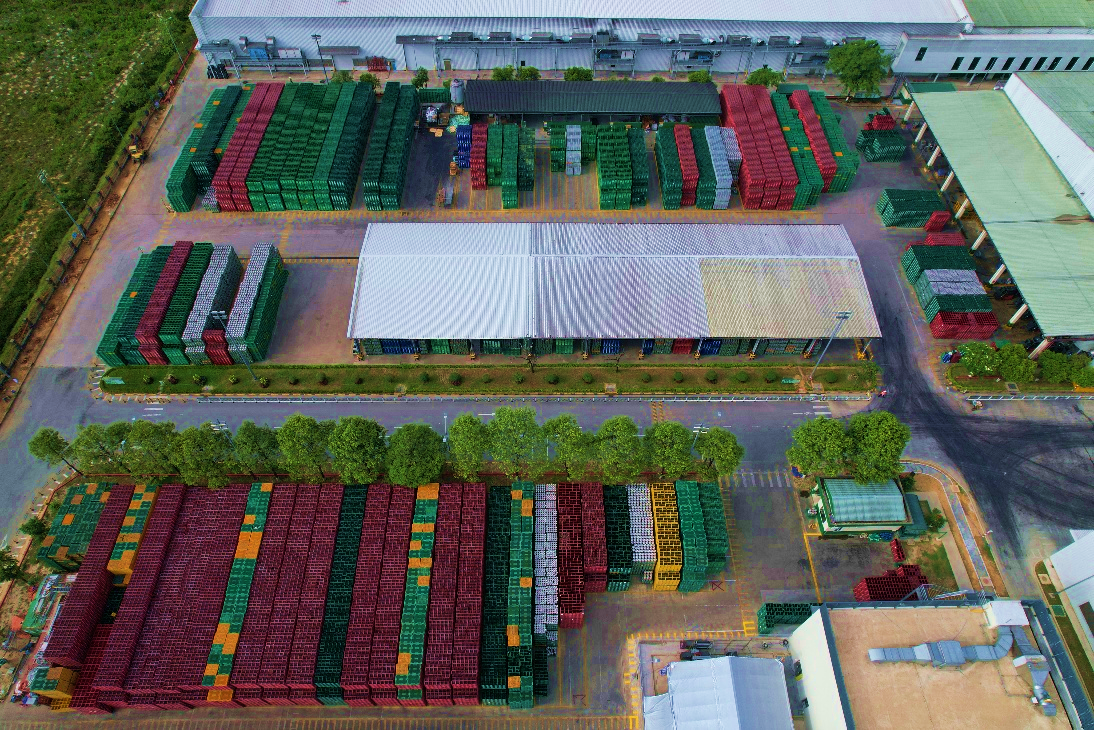
Phu Bai Brewery in Hue
Advancing circularity and lower-carbon energy
Since early 2026, Carlsberg Vietnam has achieved Zero Waste to Landfill across its brewery operations. Its approach begins with reducing waste at source and strengthening on-site segregation. Recyclable materials are recycled, remaining waste is directed to waste-to-energy solutions, and wastewater sludge is converted into agricultural fertilizer.
Circularity also extends beyond the brewery. Carlsberg Vietnam reports a 98.5% collection and reuse rate for returnable glass bottles and uses plastic crates made from 100% recycled material. Further packaging-lightweighting initiatives are being explored to reduce material consumption while maintaining product quality and performance.
Energy efficiency remains the first step in Carlsberg Vietnam’s decarbonization pathway. Efficient brewing technology and heat recovery are combined with biomass-generated steam, while its electricity roadmap includes I-REC-backed sourcing since 2022, a rooftop solar project being implemented from Q3 2026, expected to supply up to 10% of the brewery’s electricity needs, and a pathway towards direct power purchase agreements from 2028.
Carlsberg Vietnam’s rooftop solar project is expected to supply up to 10% of Phu Bai Brewery’s electricity needs.
Peter further explored the wider energy challenge during the panel "Building Vietnam’s Green Energy Ecosystem," alongside representatives from REE Energy and VinEnergo. The discussion connected the perspectives of renewable energy developers, industrial users and market facilitators.
Representatives from Carlsberg Vietnam, REE Energy and VinEnergo discuss how industrial users, renewable energy developers and market facilitators can work together to build Vietnam’s green energy ecosystem.
For manufacturers to make credible long-term renewable energy commitments, they need regulatory certainty, workable commercial structures, reliable grid infrastructure and transparent verification. Developers and investors, in turn, need sufficient visibility of industrial demand to plan and finance new renewable capacity. Early collaboration can help translate this demand into projects that are bankable, reliable and scalable.
Tags:

More News



43 NGUYEN CHI THANH STREET - BA DINH DISTRICT - HA NOI - VIET NAM
Editor-in-chief: VU THANH THUY
Deputy Editor-in-chief: NGUYEN THI MY HANH, PHAM QUOC THANG, NGUYEN TRONG NINH
Email: toasoan@vtv.vn
Tel: +84 66 897 897
Copyright, VTV News, Vietnam Television (VTV).
Licence No. 483/GP-BTTTT dated December 29, 2023 by the Ministry of Information and Communications.

