Causes of early breast implant rupture
Aesthetic clinics often explain that implant rupture is related to material aging, trauma, capsular contracture, or factors in the surgical technique. However, in reality, there are still cases where breast implants rupture after only 5–10 years, or even only one side ruptures while the other side remains completely intact. Why does this difference occur?
Understanding the causes will help patients make appropriate choices during breast augmentation as well as postoperative follow-up, thereby contributing to reducing the risk of early breast implant rupture and late complications.
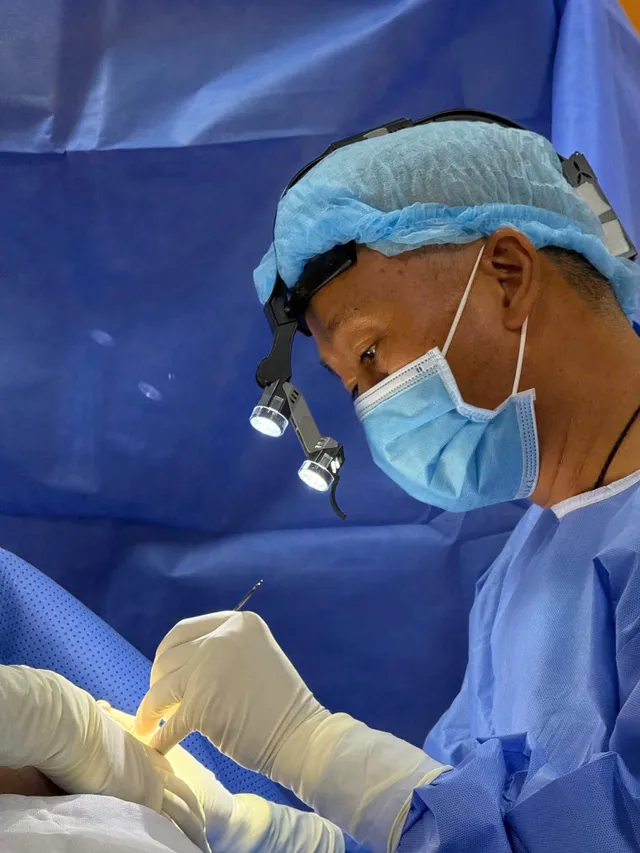
Below are insights from MD, MSc. Ho Cao Vu, who has many years of experience managing breast implant rupture cases, reconstructing implant pockets, and adjusting pressure within the pocket to help increase breast implant longevity to over 20 years.
Signs of early breast implant rupture
Some abnormal signs of the breasts may help women recognize that the breast implants are under uneven pressure. Although these signs do not confirm that the breast implants have ruptured, they may reflect an unsuitable implant pocket, thereby increasing the risk of early breast implant rupture over time.
The above observations are drawn from the clinical experience of MD, MSc. Ho Cao Vu through more than 1,000 breast implant revision surgeries, including cases of implant rupture, implant pocket reconstruction, and breast implant exchange.
For self-assessment, patients can divide the breast into 4 regions: the upper inner quadrant, upper outer quadrant, lower inner quadrant, and lower outer quadrant. After implant placement, ideally, the breast implant should be relatively evenly distributed within the pocket, helping the breast appear balanced and stable.
In a standing position with both arms relaxed, if you notice that one or both breasts show signs such as malposition, abnormal upper bulging, implant displacement, asymmetry, or the implant being concentrated more toward one side, the implant pocket may be deficient, increasing pressure on the breast implant.
In a supine position, if the breast implant moves excessively toward the axilla or both sides shift asymmetrically, this may also be a sign that the implant pocket has been under pressure over time and can no longer maintain its original position.
The above signs do not mean that the breast implant has ruptured, but they may reflect an abnormal implant pocket, increasing the risk of folding, prolonged friction, and affecting breast implant durability over time. When these signs appear, women should be examined by a specialist to accurately assess the cause and determine the appropriate management approach.
Causes of early breast implant rupture and uneven rupture between both sides
MD, MSc. Ho Cao Vu has recorded many cases of early breast implant rupture or rupture on only one side while the other side remains intact. One possible cause is that the implant pocket was created inappropriately, either excessive or deficient, causing pressure on the breast implant to be distributed unevenly.
If, during surgery, surgeons do not fully assess factors such as muscle contraction force, rib cage structure, especially in cases of a protruding or abnormal chest wall, and excessive intraoperative bleeding leading to capsular contracture. In cases of breast implant aging or early rupture, abnormally thickened pocket tissue and grade III–IV capsular contracture are often recorded, and the breast implant may be subjected to prolonged mechanical pressure at certain points.
Over time, repeated compression may create folds on the implant shell, increasing the risk of material aging and leading to early implant rupture. In many cases treated by MD, MSc. Ho Cao Vu, the rupture site is commonly found in the upper inner quadrant of the breast implant. This is an area that bears significant pressure when the implant pocket is not created and balanced appropriately.
Difficulties in managing breast implant rupture and re-placing new breast implants
In many cases of breast implant rupture that require implant exchange, the implant pocket is often deficient in the upper pole, while the lower pole and outer border have already become stretched or overly widened. After explantation of the ruptured implant and irrigation of the implant pocket, the surgeon needs to reassess the entire pocket before determining whether immediate reimplantation is feasible.
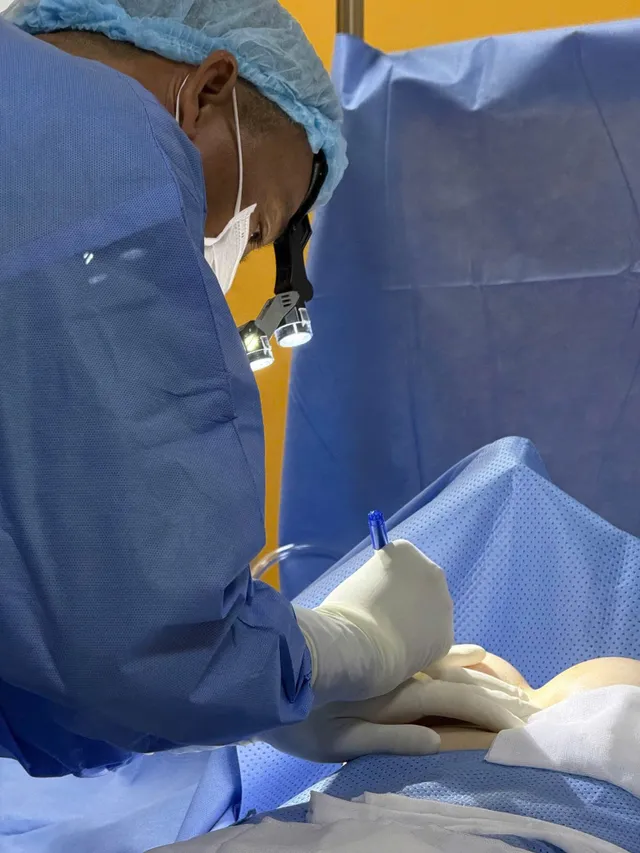
Areas of pocket deficiency in the upper pole are often difficult to manage because they require precise dissection, avoidance of tissue trauma, and minimization of bleeding. With the point dissection technique combined with an ultrasonic scalpel, the surgeon needs experience and a dedicated surgical instrument set to access the exact area of pocket deficiency, release the tissue, and recreate adequate space for the new breast implant.
In cases of inferior implant displacement or lateral displacement, the overstretched portion of the pocket needs to be reconstructed with capsulorrhaphy to reposition the implant correctly. After the pocket has been revised, the surgeon then selects an implant size and profile that aligns with the patient’s goals while remaining compatible with the current condition of the implant pocket.
However, immediate reimplantation is not feasible in every case. In some surgeries, MD, MSc. Ho Cao Vu has declined to place a new implant when the pocket was excessively widened and grade IV capsular contracture was present. Attempting reimplantation in these cases may increase the patient’s risk of recurrent complications.
Pocket creation technique to increase breast implant longevity
According to MD, MSc. Ho Cao Vu, the goal of breast augmentation is not only to create an aesthetically pleasing breast shape, but also to optimize breast implant longevity. To achieve this, the implant pocket needs to be created precisely, allowing the breast implant to be properly positioned within the pocket and minimizing abnormal pressure points.
Before surgery, the surgeon needs to comprehensively assess anatomical factors such as thoracic cage anatomy, soft tissue thickness, tissue contractility and elasticity, fibrotic changes, fascial thickening at the pectoralis major insertion, as well as select the implant diameter and projection appropriate for each patient. When these factors are calculated in a coordinated way, pressure will be evenly distributed across the entire implant surface, limiting folding, compression, or prolonged friction during daily movement.
From the professional perspective of MD, MSc. Ho Cao Vu, precise implant pocket creation is one of the important factors contributing to reducing the risk of late complications such as capsule formation, implant malposition, implant displacement, lateral displacement, and early implant rupture, while also aiming to help breast implants maintain long-term durability and prevent patients from having to undergo multiple breast revision surgeries.
Tags:

More News





43 NGUYEN CHI THANH STREET - BA DINH DISTRICT - HA NOI - VIET NAM
Editor-in-chief: VU THANH THUY
Deputy Editor-in-chief: NGUYEN THI MY HANH, PHAM QUOC THANG, NGUYEN TRONG NINH
Email: toasoan@vtv.vn
Tel: +84 66 897 897
Copyright, VTV News, Vietnam Television (VTV).
Licence No. 483/GP-BTTTT dated December 29, 2023 by the Ministry of Information and Communications.

