AI Applications: From Ideas to Television Production
On the morning of July 14, Vietnam Television (VTV)’s Youth Union Executive Committee, in collaboration with the Research and Development Center, held the seminar “AI Applications: From Ideas to Television Production” at the VTV Headquarters in Hanoi.
AI is transforming journalism and television industry
The seminar brought together experienced experts with experience in AI applications from Guangxi Radio and Television of China and 200 participants, including managers, reporters, editors, engineers, and Youth Union members.
In his opening remarks, VTV Vice President Dinh Dac Vinh said artificial intelligence (AI) is reshaping the journalism and television industry by transforming everything from content production and business operations to audience viewing experiences. Although VTV has begun integrating AI into its workflows for a few years, its applications have largely been limited to individual processes, such as content moderation, multilingual subtitling, and AI dubbing.
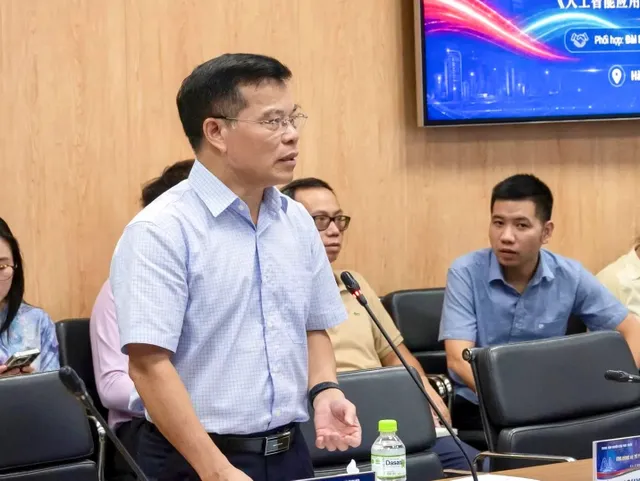
Dinh Dac Vinh, Vice President of VTV, delivers the opening remarks at the seminar.
The VTV Vice President expressed his hope that the experts would share practical insights on applying AI to journalism and television production. He stressed that AI adoption must ensure a high level of safety and accuracy, particularly with respect to journalistic ethics and the credibility of AI-assisted content.
The seminar featured three discussion sessions covering topics such as how television broadcasters can organize their operational processes to integrate AI, practical workflows for developing AI-powered content, and the limitations, challenges, and lessons learned when selecting AI tools for television production.
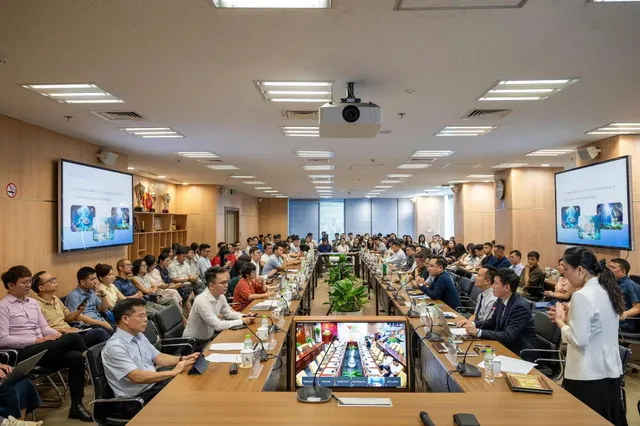
Overview of the seminar
AI cannot replace television professionals
In the opening session, Chu Lin, Deputy Director of the Integrated Media Center at Guangxi Radio and Television, shared her organization’s experience in restructuring its operations around an AI Innovation Center. The broadcaster has successfully incorporated AI into documentaries, entertainment programs, music videos, television commercials, and virtual presenters. This has established an integrated production ecosystem where AI supports traditional broadcasting workflows.
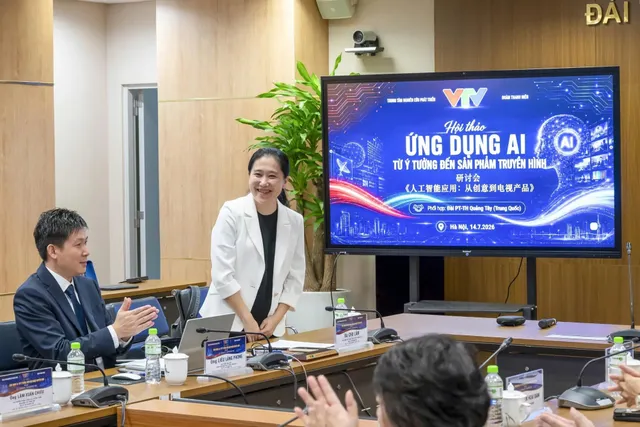
Chu Lam, Deputy Director of the Integrated Media Center at Guangxi Radio and Television, China.
Liao Lingfeng, the production director of the AI Innovation Center at Guangxi Satellite TV, then showcased a series of impressive AI-powered creative productions. Through large-scale projects and virtual presenters, he demonstrated AI's capabilities across the production process, from character design to live broadcasting.
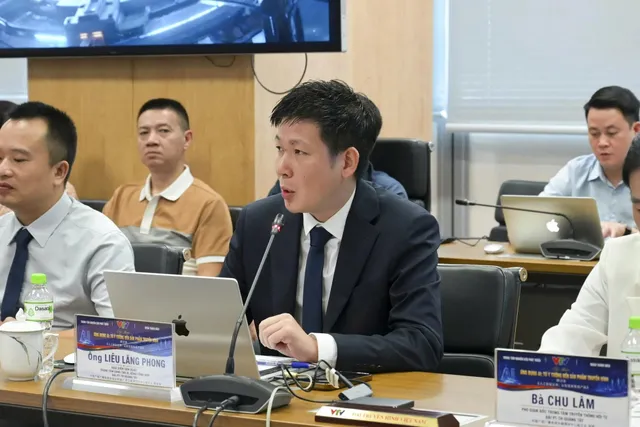
Liao Lingfeng, Production Director of the AI Innovation Center at Guangxi Satellite TV.
Despite its enormous potential, AI also comes with technical and legal limitations. Lam Xuan Chieu, Deputy Head of the Program Evaluation Division under VTV’s General Editorial Department, examined the strengths and weaknesses of China's leading AI video-generation platforms currently used in the industry.
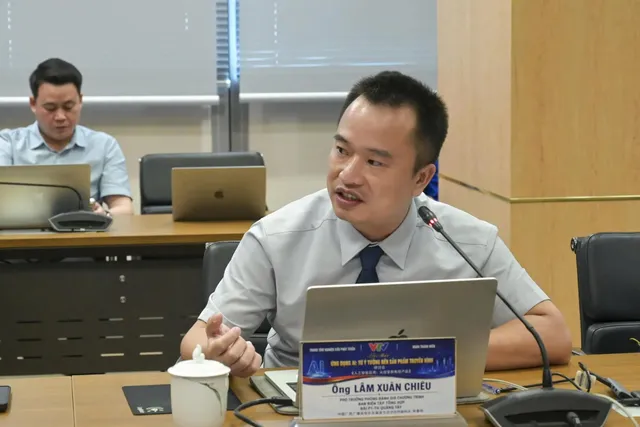
Lam Xuan Chieu, Deputy Head of the Program Evaluation Division under VTV’s General Editorial Department.
Copyright concerns, inconsistencies in AI-generated imagery, and the complexity of post-production remain significant challenges that require careful consideration. According to Mr. Lam Xuan Chieu, AI cannot replace television professionals; rather, it expands the scope for creativity. The final quality of any production still depends on each journalist’s editorial judgment, perspective, and professional responsibility.
The seminar concluded with closing remarks from Nguyen Hoai Dam, Secretary of the VTV Youth Union. He expressed his sincere appreciation to the speakers for sharing their expertise. He encouraged VTV staff to continue embracing learning and innovation and to integrate technology more extensively into the broadcaster's management, operations, and production.
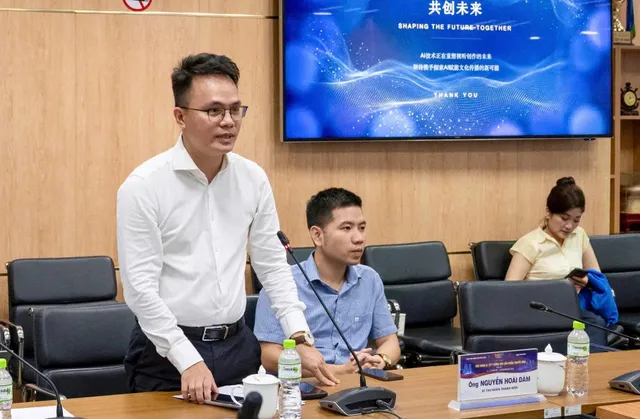
Nguyen Hoai Dam, Secretary of the VTV Youth Union.
The seminar’s “hands-on” approach will continue through a series of four follow-up thematic workshops. These sessions will address practical production challenges, such as using AI to recreate natural disasters and emergency scenarios, covering hard-to-reach locations, and creating educational content for children and families, as well as documentary filmmaking.
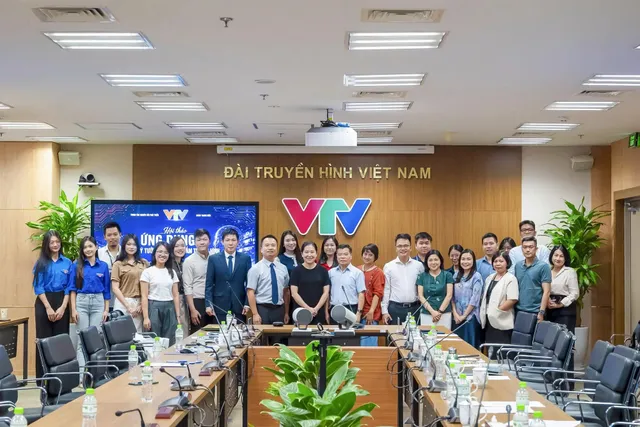
Organized jointly by VTV’s Research and Development Center and its production departments, the initiative aims to integrate AI more deeply into everyday television production and support VTV's next stage of digital innovation.
Tags:

More News


43 NGUYEN CHI THANH STREET - BA DINH DISTRICT - HA NOI - VIET NAM
Editor-in-chief: VU THANH THUY
Deputy Editor-in-chief: NGUYEN THI MY HANH, PHAM QUOC THANG, NGUYEN TRONG NINH
Email: toasoan@vtv.vn
Tel: +84 66 897 897
Copyright, VTV News, Vietnam Television (VTV).
Licence No. 483/GP-BTTTT dated December 29, 2023 by the Ministry of Information and Communications.

